Gottfried Eichler the Elder
1677 - 1759
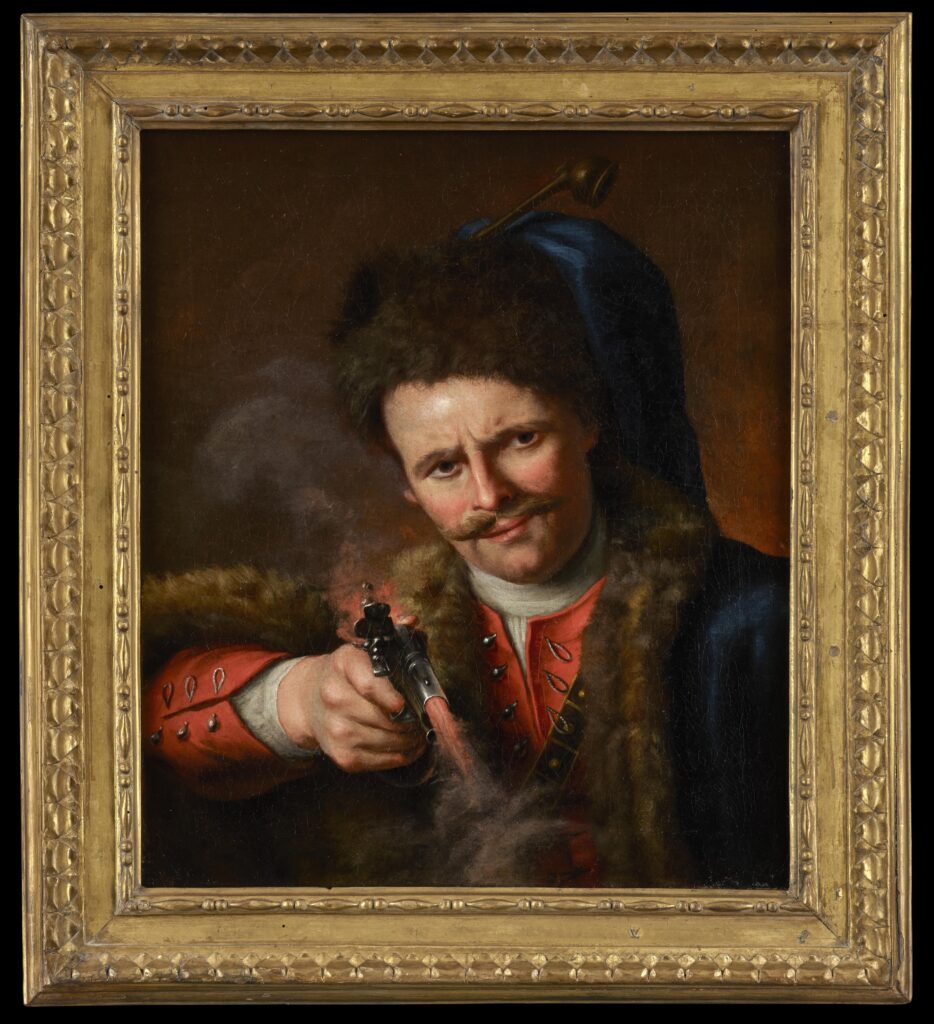
A Portrait of a Hussar pointing and firing his Pistol
Medium:
Oil on Canvas
Category:
Dimensions:
52.5(h) x 44.5(w) cms
Framed Dimensions:
67(h) x 59(w) cms
Signed:
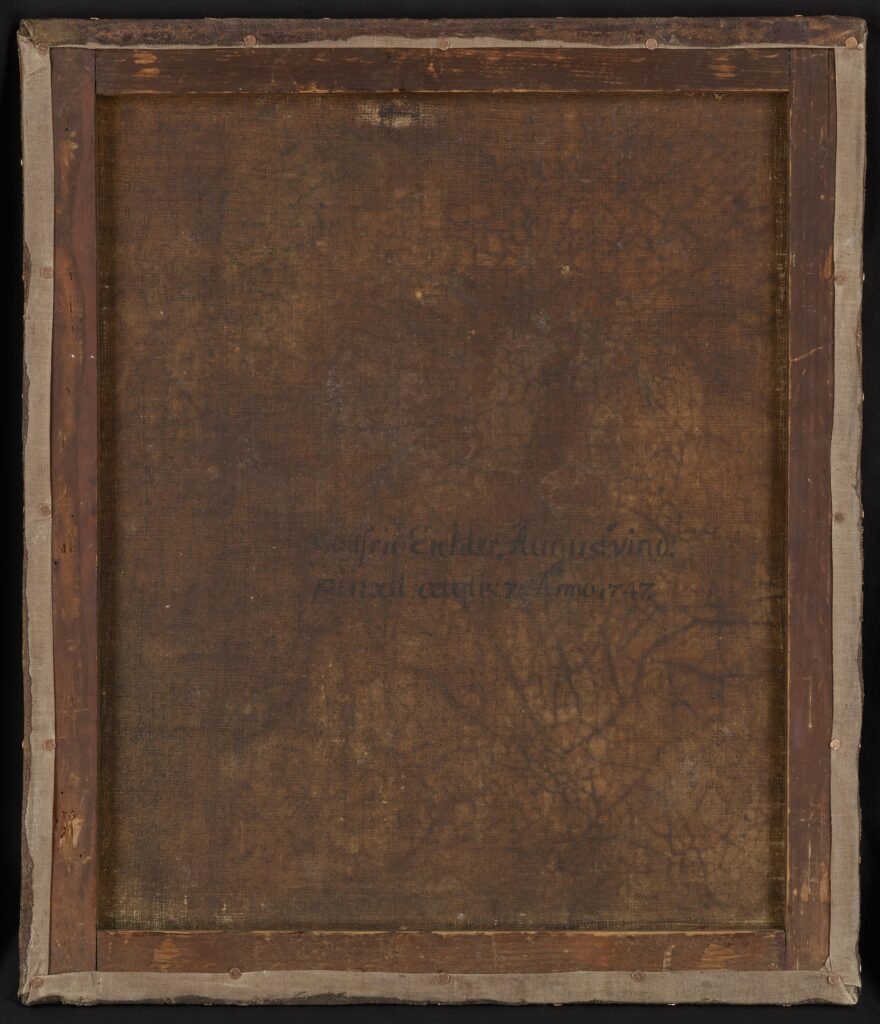
Inscribed and dated verso: 'Gottfried Eichler Augustvino. /pinxit atatis 70 Anno 1747'
Essay:
Gottfried Eichler was born in the town of Lippstadt near Soest. Little is known about his early training. It is thought he trained with Johann Heiss in Augsburg where he is documented between 1696 - 1703. He appears to have travelled extensively in Germany and later moved to Vienna. From here he travelled to Rome where he became a pupil of Carlo Maratta. He painted a large number of portraits many of which were engraved and some historical paintings. Eichler later returned to Augsburg where he was the Director of the Academy from 1742 until his death in 1759 and was made Court Painter to the Elector of the Palatinate of Heidelberg.
-
In this startling portrait of a hussar firing a pistol the viewer is confronted as though involved in a duel. Blazing gunpowder erupts from the barrel and rear of the gun in the split-second of ignition, the moment between moments at the start of a fight. Little other context is given so the viewer is allowed to make up their own minds as to the reason for the shot being fired so thrillingly close.
The man's hussar uniform is painted with immaculate skill. The hussar’s costume is identifiable by the kolpak (fur hat) with a blue bag atop and the short red jacket with gold braid across the front. Hussars were also known for sporting long majestic moustaches but no beards. He could well be a Saxon (the artist Eichler per the inscription verso was working in Augsburg at the time on the edge of northern Bavaria and Saxony) or even Polish or Hungarian. The pistol is a short-barrelled flintlock carried for personal protection, rather than a service pistol, which would have had a much longer barrel.
A hussar is a class of light cavalry originally from Hungary and was adopted in militaries around Europe in the 17th and 18th centuries. They gained a reputation as dashing romantic heroes, reckless and brave, but also dangerous and hot-tempered.
Provenance:
Private collection, Austria.