Jan van der Vaart
c.1650 - 1727
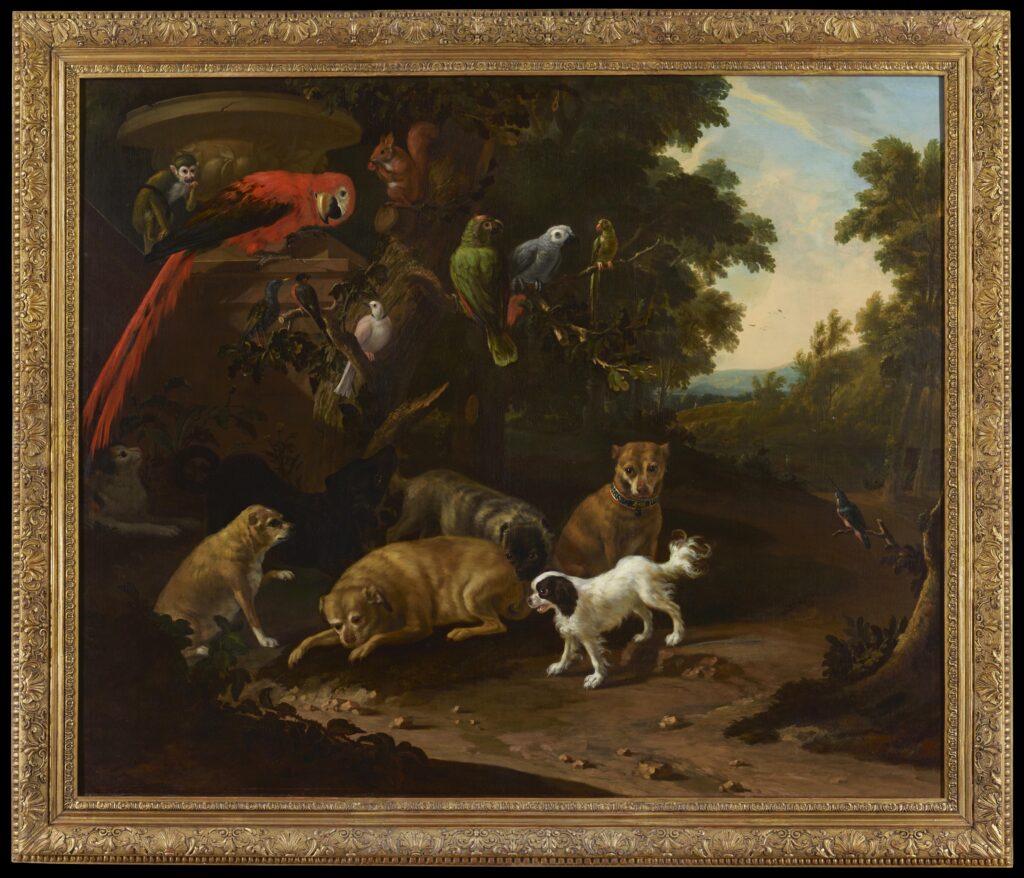
Numerous Dogs together with Parrots, a Monkey and a Squirrel by a Stone Urn in a Landscape
Medium:
Oil on Canvas
Category:
Dimensions:
173(h) x 141(w) cms
Framed Dimensions:
194(h) x 165(w) cms
Signed:
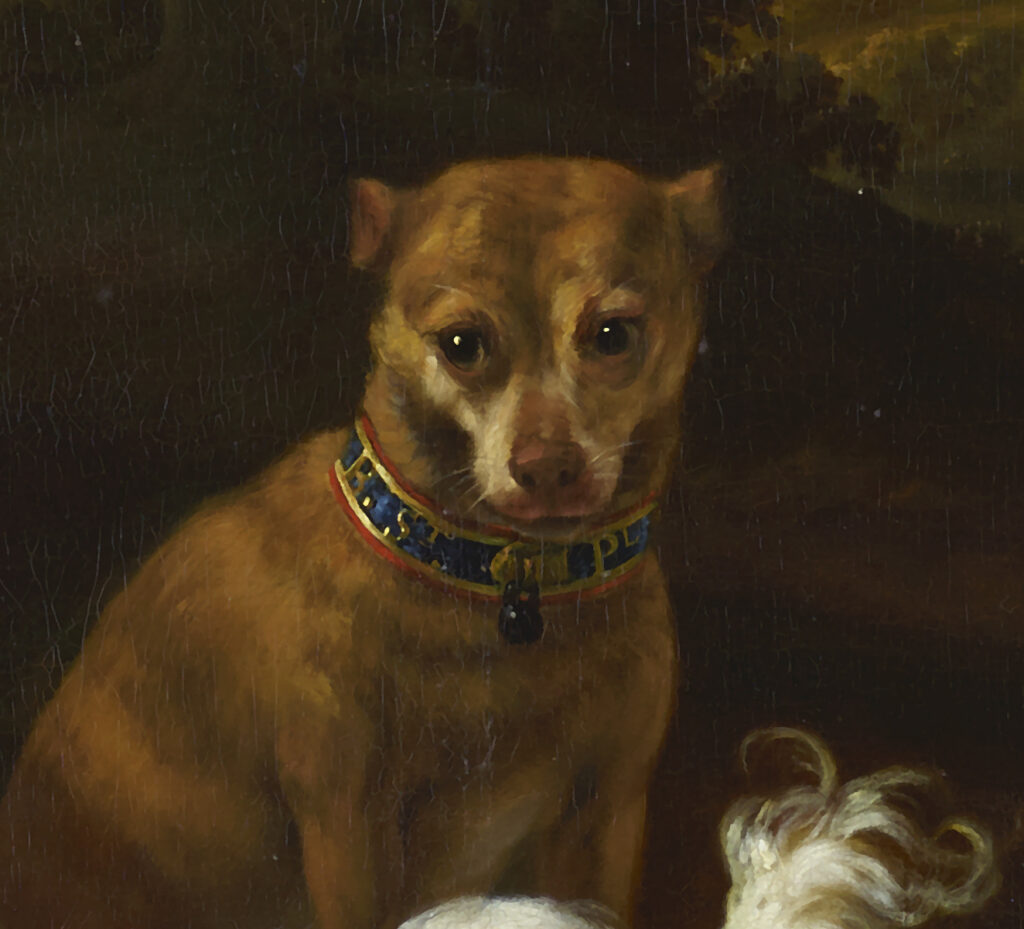
Signed and Dated 'ADWaa... F.c 1727'. Dog Collar Inscribed 'B.St.PL'.
Exhibitions:
Essay:
Born in Haarlem; pupil of Thomas Wijck. Vaart came to London in 1674 as a drapery painter for Willem Wissing and collaborated with Sir Peter Lely and Frederick Kerseboom. Following the Glorius Revolution Vaart found a successful career painting the portraits of the English aristocracy and monarchy including Queen Mary II and the Earl of Pembroke.
Vaart was a versatile artist and painted landscapes, still lifes, animal pictures, and produced mezzotints. He is perhaps best known for his famous trompe l'oeil Portrait of a Violin produced for the Duke of Devonshire and hanging today at Chatsworth House.
From 1713 Vaart became a successful picture dealer and restorer. He died in 1727, aged 74, and was buried in St Paul's, Covent Garden.
-
Dated 1721 this work would have been commissioned from van der Vaart by a wealthy, probably English, patron. Painted for a decorative scheme in a grand house, the inscription on one of the dogs' collars 'B.ST.PL' is a clue as to the identity of this patron who has not yet been identified.
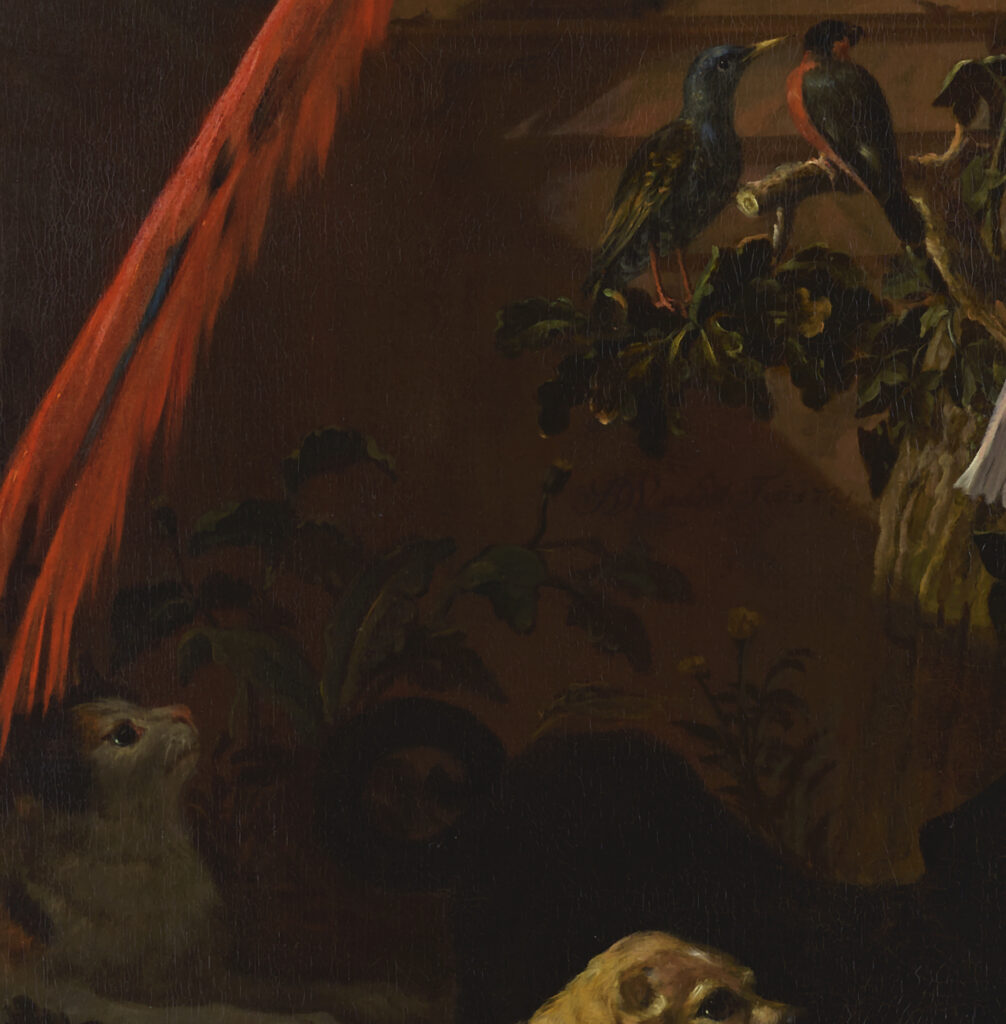
The animals are a fascinating mixture of native and non-native species. In the top half of the painting we see a squirrel monkey from South America, a scarlet macaw, a red squirrel, a yellow-crowned amazon parrot, an african grey, and a parakeet. The small birds on the branch just below are a European starling, a bullfinch, and a collared dove which is now common but was a rare species to Britain in the 18th century imported from Asia. To the far right is a kingfisher. Below a cat looks greedily up at the chorus.
The dogs include a toy spaniel, a black old english terrier, and several slightly overfed pugs. The dogs, presumably favourite lapdogs, are combined with both exotic birds and native European animals which give the impression of a menagerie in miniature.
Provenance:
Aristocratic collection, Brussels, for over 100 years .